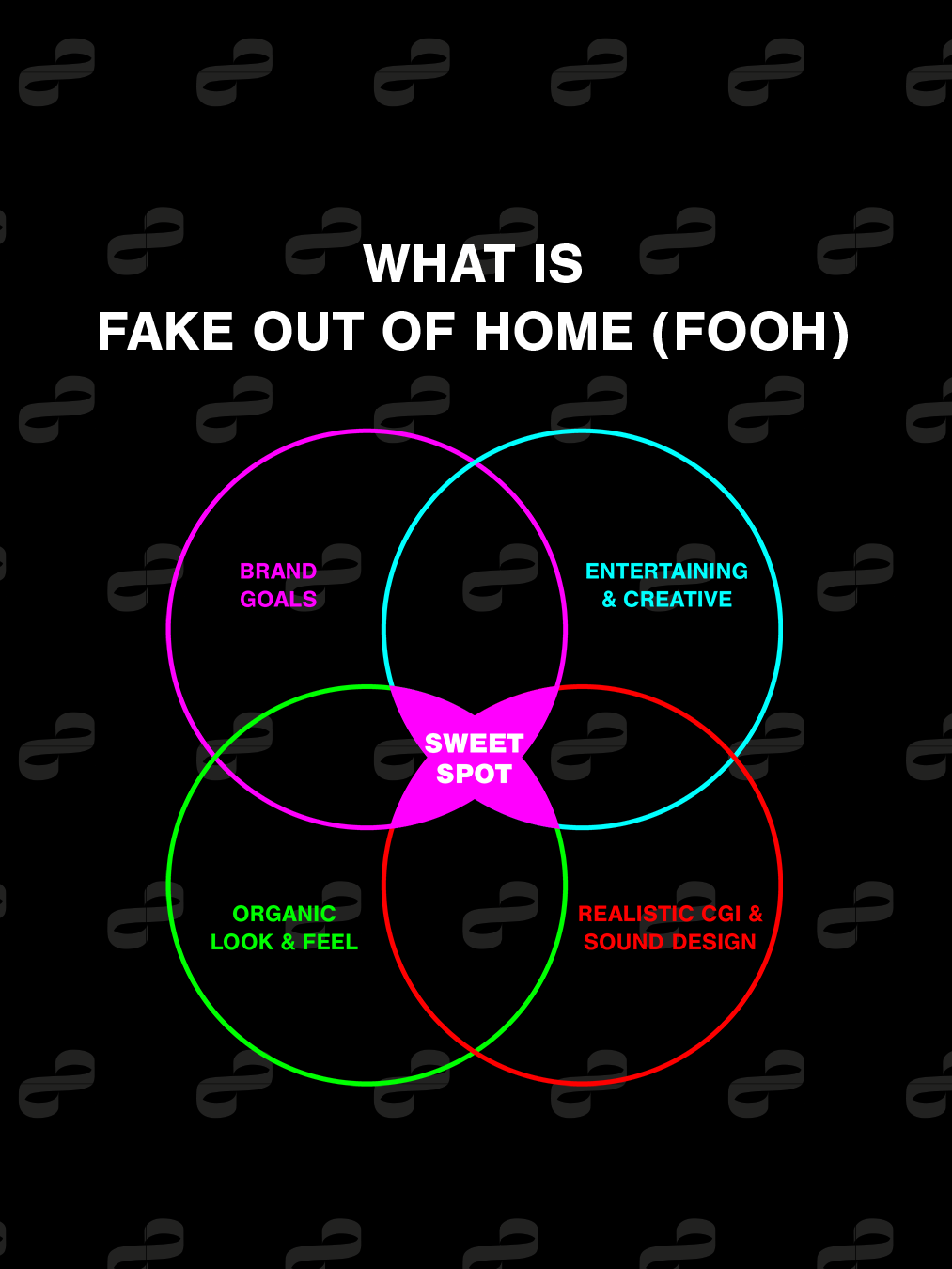
Trompe l'oeil is the goal. The French means deceive the eye. Romans painted fake windows and columns onto flat walls in Pompeii. Baroque ceiling painters went further and put open sky above the congregation, sometimes with a dome that was never built. The intent has been consistent for a very long time. Take a flat surface and convince someone there is depth behind it.
Anamorphic is the method. The artwork is distorted on purpose so that it resolves correctly from one specific position. Holbein put a stretched skull across the bottom of The Ambassadors in 1533, unreadable until you move to the right of the frame. Street painters work the same way on pavement. The drawing looks wrong from everywhere except the spot where the photographer stands.
Naked-eye 3D is the marketing name that arrived with LED screens. Corner installations in Seoul and Tokyo made the format visible to a wide audience around 2020, and the term stuck because it separates the effect from anything requiring glasses. The screens themselves did not invent anything. They gave a very old technique a surface that could animate.
Stureplan video footage by Atracta. All CGI work by Santeri Salmi.